Step right up as we delve into the fascinating world of Military Leadership and Strategy. Get ready for an engaging journey filled with historical insights, strategic wisdom, and the impact on society and individuals alike.
From defining the essence of military leadership to examining its evolution over time, this topic promises to enlighten and entertain in equal measure.
Overview of Military Leadership and Strategy
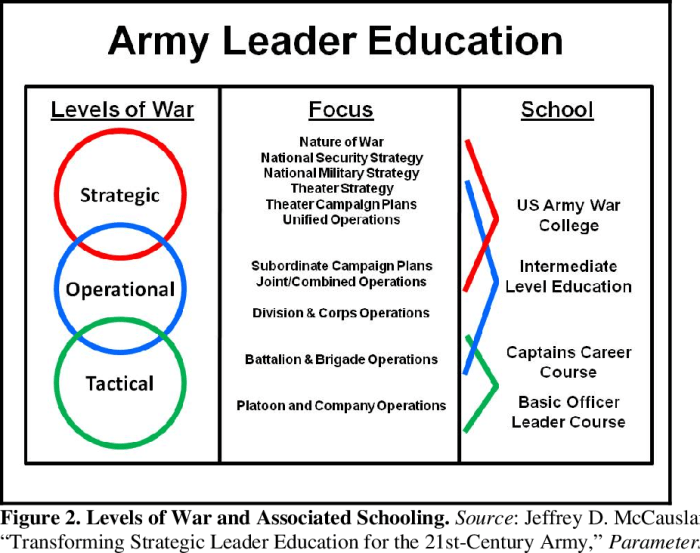
Military leadership and strategy are crucial components in the context of armed forces, playing a vital role in ensuring the success and effectiveness of military operations. Effective leadership in the military involves guiding and inspiring troops, making critical decisions, and setting a clear vision to achieve objectives. Leaders must possess qualities such as integrity, courage, and decisiveness to command respect and loyalty from their subordinates.Military strategy, on the other hand, refers to the overall plan or approach designed to achieve specific goals in warfare.
It involves the utilization of resources, tactics, and logistics to outmaneuver the enemy and secure victory on the battlefield. Strategy is essential for maximizing strengths, exploiting weaknesses, and adapting to changing circumstances during combat.
Relationship Between Military Strategy and Achieving Objectives in Warfare
Military strategy is directly tied to the successful accomplishment of objectives in warfare. By carefully formulating and executing a strategic plan, military leaders can leverage their forces’ strengths, exploit vulnerabilities in the enemy’s defenses, and secure key positions to achieve victory.
- Effective military strategy enables forces to outmaneuver and outsmart the enemy, gaining a tactical advantage on the battlefield.
- Strategic planning allows military leaders to allocate resources efficiently, ensuring that troops are well-equipped and positioned to confront the enemy effectively.
- Adapting and adjusting strategies in response to changing circumstances and enemy actions is crucial for maintaining the upper hand in combat situations.
- Ultimately, the successful execution of military strategy leads to the achievement of objectives, whether it be capturing territory, neutralizing threats, or protecting national interests.
Historical Perspectives
Military history is filled with examples of successful leaders who have shaped the course of wars and battles through their strategic decisions. These leaders have shown the importance of effective military leadership and strategy in achieving victory on the battlefield.
Alexander the Great and the Art of War
- Alexander the Great, known for his innovative tactics and bold strategies, conquered vast territories across Asia and Africa.
- His use of combined arms, rapid movement, and psychological warfare set him apart as a military genius.
- One of his most famous battles was the Battle of Gaugamela, where he defeated the Persian King Darius III despite being outnumbered.
Napoleon Bonaparte and the Rise of Modern Warfare
- Napoleon Bonaparte revolutionized military strategy with his emphasis on speed, flexibility, and concentration of forces.
- His victories at Austerlitz, Jena, and Wagram showcased his ability to outmaneuver larger enemy armies.
- Napoleon’s downfall at the Battle of Waterloo highlighted the importance of adapting strategies to changing circumstances.
World War II and the Birth of Total War
- World War II saw the emergence of total war, where entire societies were mobilized for the conflict.
- Leaders like Winston Churchill, Franklin D. Roosevelt, and Joseph Stalin played crucial roles in shaping military strategy and alliance coordination.
- Key battles like Stalingrad, Normandy, and Midway demonstrated the significance of strategic planning, logistics, and intelligence in warfare.
Principles of Military Leadership
Military leadership is built on a foundation of key principles that guide leaders in their decision-making and actions. These principles are essential for maintaining order, discipline, and effectiveness within the military.
Integrity
Integrity is a fundamental principle of military leadership, emphasizing honesty, truthfulness, and moral uprightness. Leaders must act with integrity to earn the trust and respect of their subordinates, fostering a culture of accountability and ethical behavior.
Decisiveness
Decisiveness is another crucial principle that military leaders must embody. In high-pressure situations, leaders must make timely and effective decisions to ensure the safety and success of their troops. Decisive leaders inspire confidence and demonstrate a clear sense of purpose.
Adaptability
Adaptability is key in the ever-changing landscape of military operations. Leaders must be flexible and able to adjust their strategies based on evolving circumstances. Those who can adapt quickly to new challenges and environments are better equipped to lead their teams to victory.
Leadership Styles Across Military Branches
Each branch of the military has its own unique culture and operational requirements, leading to variations in leadership styles.
Army
In the army, leadership is often hierarchical and focused on discipline and structure. Army leaders are expected to lead by example, instilling a sense of duty and loyalty in their troops.
Navy
Navy leadership emphasizes teamwork and collaboration, as sailors must work closely together on ships and submarines. Naval leaders must be adept at managing resources and personnel in a confined and high-stakes environment.
Air Force
Leadership in the air force is centered around innovation and technological expertise. Air force leaders must be forward-thinking and strategic, leveraging cutting-edge technology to achieve mission objectives.
Role of Emotional Intelligence in Military Leadership
Emotional intelligence is increasingly recognized as a vital component of effective military leadership, enabling leaders to understand and manage their own emotions and those of their team members.
Empathy
Empathy allows military leaders to connect with their troops on a personal level, fostering trust and camaraderie. Leaders who demonstrate empathy are better equipped to address the emotional needs of their team members and build strong relationships.
Conflict Resolution
Effective conflict resolution is essential in the military, where tensions and disagreements can arise in high-stress environments. Leaders with strong emotional intelligence can navigate conflicts calmly and diplomatically, preserving morale and unit cohesion.
Decision-Making
Emotional intelligence plays a critical role in decision-making, helping leaders consider the emotional impact of their choices on their team. Leaders who are attuned to the emotions of others can make more informed decisions that prioritize the well-being of their troops.
Strategy Formulation and Implementation
In military operations, the process of formulating a strategy is crucial for achieving success on the battlefield. It involves careful planning, assessment of resources, and effective execution to achieve the desired objectives.
Different Strategic Approaches
- Conventional Warfare: This approach involves traditional military tactics and strategies, focusing on large-scale battles and clear objectives.
- Unconventional Warfare: This approach involves guerrilla tactics, asymmetric warfare, and irregular strategies to combat a more powerful enemy.
- Cyber Warfare: This approach involves utilizing technology and information systems to disrupt the enemy’s communication networks and infrastructure.
Flexibility and Adaptability in Combat
In the heat of battle, the ability to adapt and adjust strategies is crucial for military success. Flexibility allows commanders to respond to changing circumstances, unexpected developments, and new threats effectively. It also enables them to exploit opportunities and overcome challenges on the battlefield.
“No plan survives contact with the enemy.”
Helmuth von Moltke
- Flexibility in resource allocation and deployment is essential for responding to dynamic battlefield conditions.
- Adaptability in tactics and strategies allows military units to outmaneuver the enemy and exploit their weaknesses.
- Continuous assessment and reassessment of the situation help commanders make informed decisions and adjust their plans accordingly.
Societal Impact
Military leadership and strategy play a crucial role in shaping societal perceptions of the military, influencing national security, and impacting civilian populations during conflicts. Let’s delve deeper into these interconnected aspects.
Influencing Societal Perceptions
Military leadership and strategy have a significant impact on how the general public perceives the military. Effective leadership can instill confidence and trust in the armed forces, portraying them as capable protectors of the nation. On the other hand, poor leadership or controversial strategies can lead to skepticism and criticism from society, affecting the overall reputation of the military.
Relationship with National Security
The relationship between military leadership and national security is fundamental. Strong and strategic leadership is essential for safeguarding a nation’s security interests, both domestically and internationally. By formulating and implementing effective strategies, military leaders can enhance the defense capabilities of a country, deter potential threats, and ensure the safety of its citizens.
Impact on Civilian Populations
Military strategies can have far-reaching implications for civilian populations during conflicts. The decisions made by military leaders, such as target selection, rules of engagement, and humanitarian efforts, directly influence the well-being and safety of civilians caught in the midst of war. It is crucial for military leaders to consider the humanitarian consequences of their actions and prioritize the protection of non-combatants in conflict zones.
People Behind the Strategy
Military leaders have played a crucial role in shaping historical events through their strategic decisions. Their ability to lead, plan, and execute missions has had a significant impact on the outcomes of wars and conflicts throughout history.
Key Characteristics of Successful Military Leaders
Successful military leaders possess a combination of key characteristics that set them apart. These include:
- Strategic Thinking: Effective military leaders have the ability to think and plan strategically, considering various possible scenarios and outcomes.
- Decision-making Skills: They can make tough decisions under pressure, often with limited information available.
- Communication: Good communication skills are essential for conveying orders and instructions clearly to their subordinates.
- Adaptability: Military leaders must be able to adapt to changing situations on the battlefield quickly.
- Courage: They must display courage and lead by example, inspiring their troops to follow suit.
Collaboration and Teamwork in Military Strategy
Collaboration and teamwork among military personnel are crucial for the successful execution of strategies. This involves:
- Unity of Command: Ensuring that everyone is clear on their roles and responsibilities within the chain of command.
- Trust and Mutual Respect: Building trust among team members fosters a sense of unity and cooperation.
- Shared Goals: Aligning individual goals with the overall mission objectives to work towards a common purpose.
- Effective Communication: Open and effective communication channels are essential for sharing information and coordinating actions.
- Delegation: Delegating tasks to the right individuals based on their strengths and expertise ensures efficient execution of the strategy.
Closure
As we conclude our exploration of Military Leadership and Strategy, remember that the principles discussed here not only shape armed forces but also have a profound impact on broader societal dynamics. Dive deep into the realm of military strategy and leadership, and discover the intricate dance between planning, execution, and adaptation.
Clarifying Questions
What are the key principles of military leadership?
The key principles include integrity, decisiveness, and adaptability.
How do different branches of the military vary in leadership styles?
Leadership styles can vary between branches such as the army, navy, and air force based on their unique operational requirements.
How does emotional intelligence play a role in effective military leadership?
Emotional intelligence is crucial in understanding and managing emotions, building relationships, and making sound decisions in high-pressure situations.